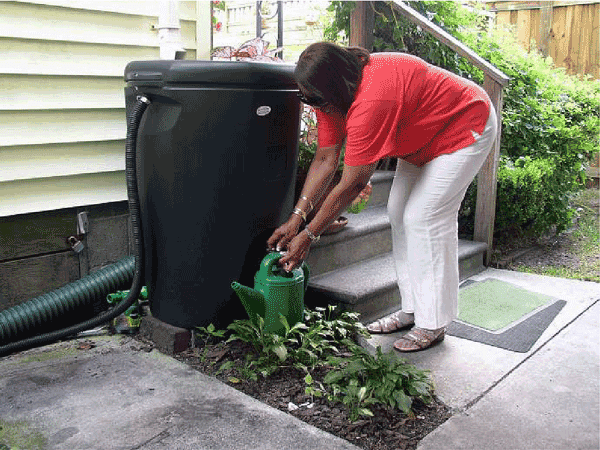
Although rainwater harvesting has been practiced for thousands of years, recent concerns over water supplies and the environment have prompted a renewed interest in this method of water sourcing. While advanced systems are commercially available, a homeowner can construct a simple rainwater harvesting system for home use with a basic understanding of its components and function.
A prolonged drought in North Carolina in 2007 and 2008 that necessitated mandatory water restrictions got consumers’ attention. Residents started thinking more about the options for alternative water sources. Most homeowners use potable water (treated drinking water) to satisfy all of their water needs, but this type of water can be replaced by captured rainwater for many purposes. For example, harvested rainwater can be used for watering gardens, washing vehicles, and flushing toilets. With special treatment and plumbing, it is even possible for harvested rainwater to become the primary water supply for a home or business.
A rainwater harvesting system captures stormwater runoff, usually from a rooftop, and stores that water for later use. Using harvested rainwater for purposes that don’t require treated drinking water has many advantages:- It reduces the demand on municipal water supplies and thus increases the sustainability of drinking water supplies.
- Its use may be exempt from restrictions during a drought.
- It can reduce water bills, meaning the system can partially pay for itself.
- It can improve the environment by capturing nutrients and other pollutants from rooftop runoff, preventing them from contaminating surface waters.
- It can contribute valuable plant nutrients, such as nitrogen and phosphorus, to garden irrigation water.
A rainwater harvesting system consists of four main components.
- The cistern — or water storage tank — stores runoff for later use.
- The gutter system collects runoff from the rooftop and directs it into the cistern.
- The overflow pipe allows excess runoff to leave the cistern in a controlled manner.
- The outlet pipe, which is sometimes connected to a pump, draws water from the bottom of the cistern for use.
Consider all of these components and how they work together before installing a rainwater harvesting system. The cistern is the primary component, so select and locate it based on anticipated water needs. Remember that local plumbing codes might affect the installation, and periodic maintenance will be required.
Cistern Selection