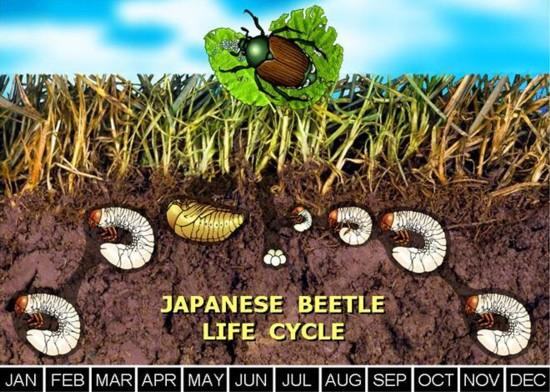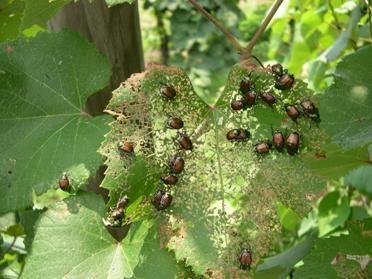
Japanese Beetles are an invasive species, and are starting to make their appearance. You may be able to reduce the population that appears simply by catching the Japanese Beetles when they first appear. They send out aggregation and sexual pheromones to attract more beetles. You can start management when they first appear, by hand-picking or trapping the beetles.
Hand-picking is an option that is easy for homeowners to do. Just go out early in the morning and place a container that has soapy water in it underneath the area where the beetles are. They tend to drop off the plant when disturbed, so if you start to pick them off, they will drop into the soapy water and drown. If you can hand-pick the first few that appear, you may be able to reduce the number of others that may show up.
Trapping is another option. Some folks often get wrong because they place the trap near the plant or plants they want to protect. Place the traps away from the plants you want to protect so that you draw the beetles away from them. The bags that come with the traps can fill up in a day, so you will have to empty them on a regular basis for the next few weeks. Be aware that if you live in the rural parts of the county where there are pastures, the beetles will be attracted to the traps and you may have more than if you did not use the traps at all.
The damage done to foliage and flowers of ornamental plants is mostly aesthetic, though there are insecticides that can be used. If you choose to use an insecticide, be sure to read and follow the label directions and take all precautions to protect beneficial insects and pollinators.