Did you know that fire ants are actually native to southern Brazil?
Fire Ants
(Updated: June 14, 2021, 11:18 a.m.)
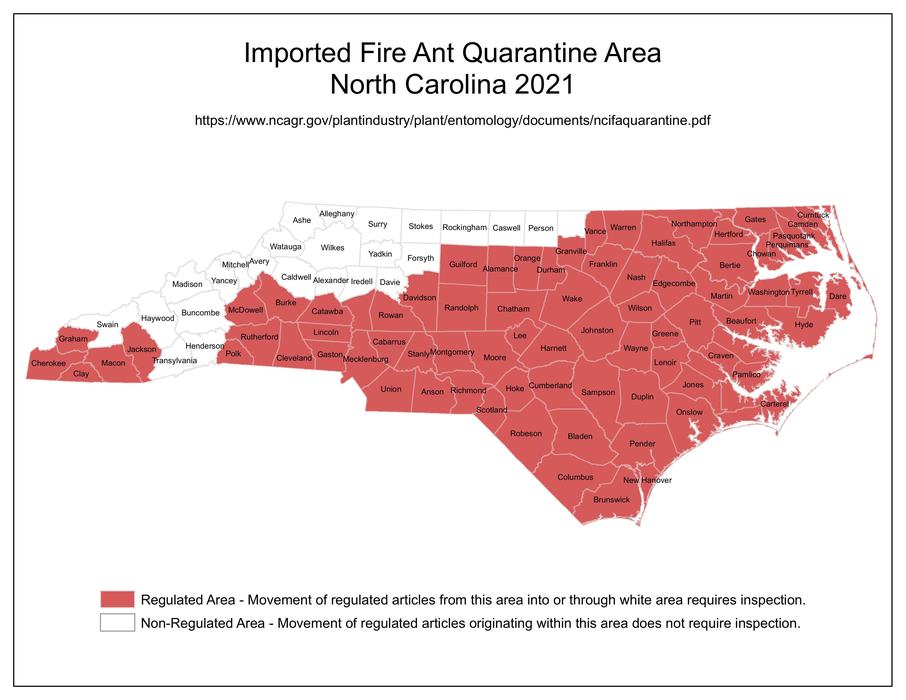
They currently can be found in eleven southern states and in 74 of 100 counties in North Carolina. There is a quarantine by the US Department of Agriculture & the N.C. Department of Agriculture and Consumer Services that regulates the movement of items that might carry fire ant infestations to other uninfested parts of the state and country.
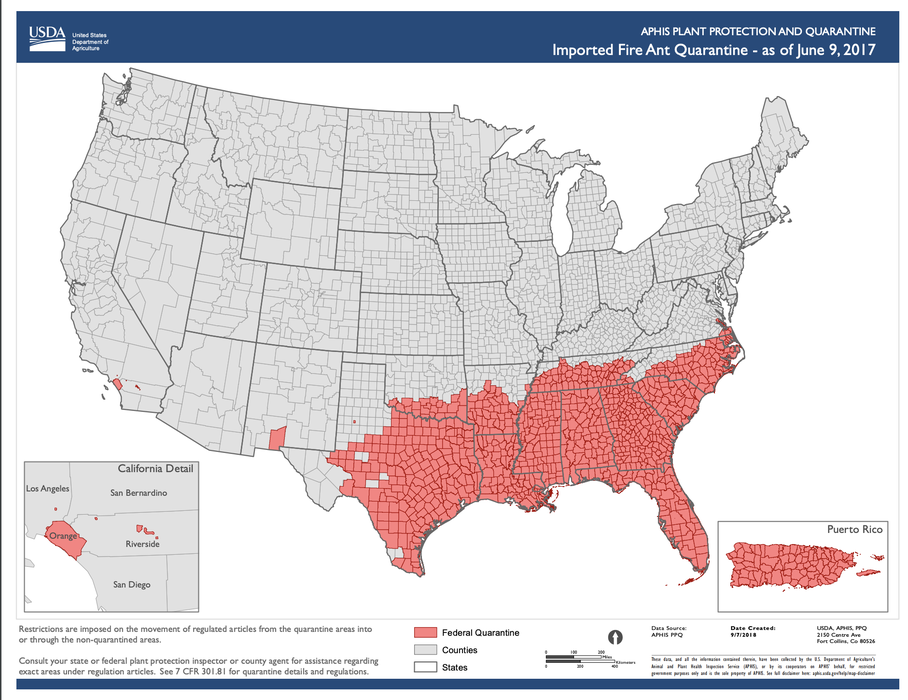
From an agricultural perspective, fire ants are more of a nuisance. Fire ants annoy field workers, fire ant mounds can damage harvesting equipment, cause livestock injury & crop damage. They have a much greater impact on the ornamental plant, sod, and landscaping industries because of problems associated with shipping. Potentially infested plant material or soil can transport fire ants into uninfested areas. Often fire ant mounds found in a previously uninfested area can be traced to landscaping performed at residential or commercial developments.
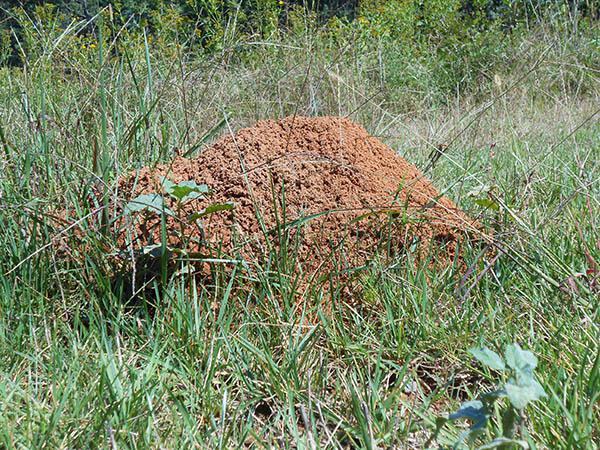
Fire ant mounds vary in size, but are usually in direct proportion to the size of the colony. So, a mound that is 2’ in diameter & 18” tall may contain over 100,000 ants. Mounds in clay soil will usually be symmetrical and dome-shaped. Fire ants are difficult to control and require you to use multiple means to manage them. Managing fire ants requires you to come at them in several ways: start by, inspecting any new landscape material before you purchase & plant in your landscape; eliminate food sources; and chemical insecticides. The Texas “two-step” method of control can be very effective. In addition, NC State University offers many resources on how to manage fire ants in the landscape.
Join our mailing list!
Enter your email address to receive updates.
Written By