Producing hay is an expensive and labor-intensive process. And as inputs like diesel and fertilizer go up, the cost to produce hay is even higher. The last thing producers want to do is waste all that money by improperly storing the hay. There are many considerations producers make when deciding how and where to store their hay. Ease of access and proximity to livestock are major factors in the decision-making process. In order to make sure hay stays in good quality there are several things to keep in mind.
The outer 6 inches of a round bale contains about 30-40% of the bale, depending on the size of the bale. Therefore, losses along the outer edges can have a significant impact. Soil contact causes the majority of hay loss. When possible, get the bale off the ground. If it must be on ground select an area that is well drained or slightly sloped to avoid the bale sitting in too much moisture. Creating a bale storage pad is another option. By laying down a layer of geotextile fabric followed by a layer of gravel, you reduce the amount of moisture that can seep into the bale. This is a less expensive option compared to a barn but will help reduce the losses from field storage. Bales can also be stacked on pallets to help reduce loss due to moisture.
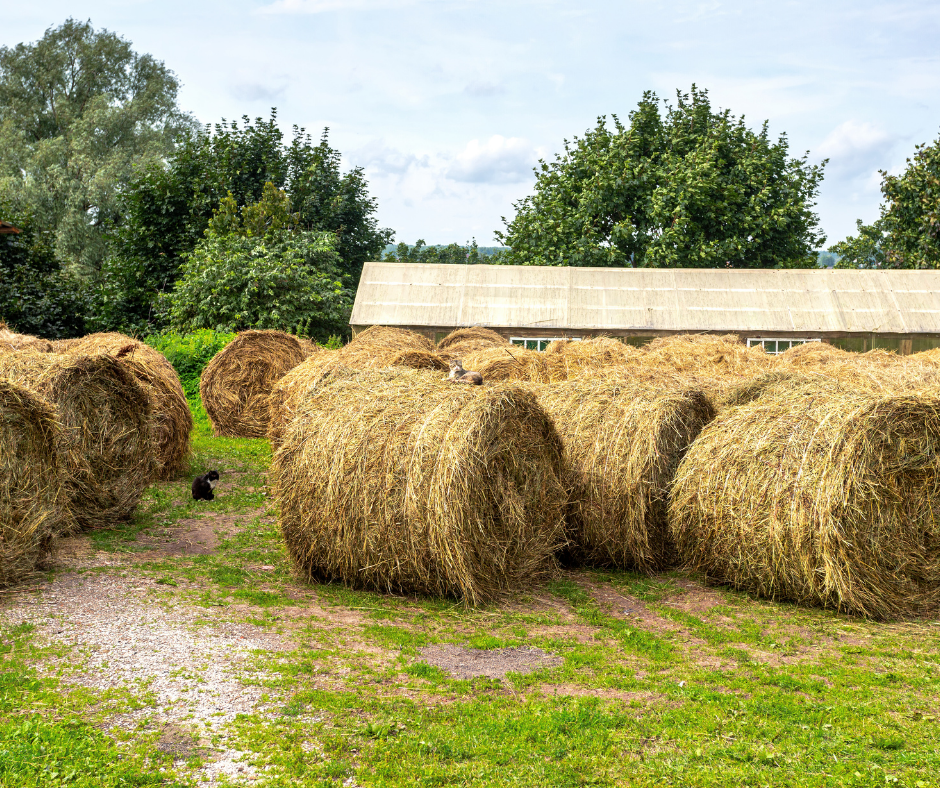
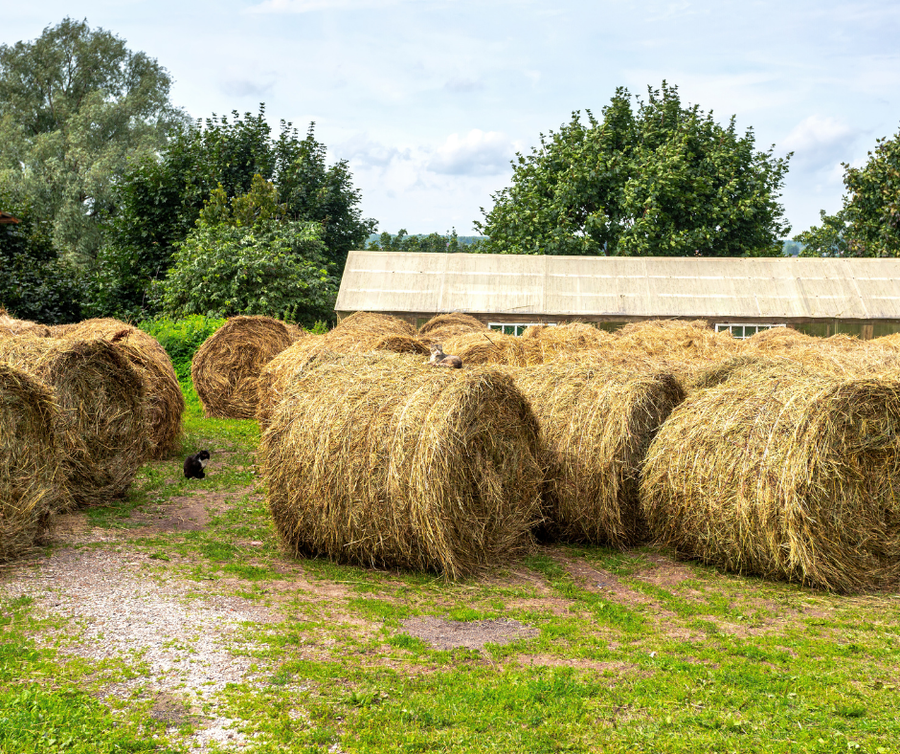
When storing bales outdoors, place the flat ends against each other to protect those edges from moisture damage. Leave space between the round sides when placing multiple rows to promote airflow. Stacking bales should be avoided unless there is cover of some type as the top bales can cause rain to run off and seep into bales on the bottom. Tarps and other heavy duty plastic covers can be used to cover bales when stored outside.
Storing bales under trees does not provide much cover from rain or other weather, but does prevent sunshine and airflow from reaching the area to help dry it out afterwards. Storing hay under trees is not a recommended storage option.
Storing hay in a barn or covered shelter helps reduce most storage losses but can be a more expensive option initially to build. Hay stored in a barn can be stacked as needed. Pallets or a gravel base is still a good option to prevent moisture from damaging the bottom of the bales.
For horse farms, it is better to store the hay away from the barns and structures where animals stay. If a bale has too much moisture, the resulting fermentation process creates heat, which can result in a fire breaking out. Therefore, it is recommended to store hay in a separate structure for safety purposes. There are many considerations that go into where to store hay. Be aware of how your storage method and placement can impact the quality and longevity of your valuable hay.