Do you have hydrangeas in your garden? Are they like the ones in my garden that become infected each year with a leaf spot fungus?
Hydrangeas & Fungal Leaf Spots
(Updated: May 9, 2022, 7:08 a.m.)
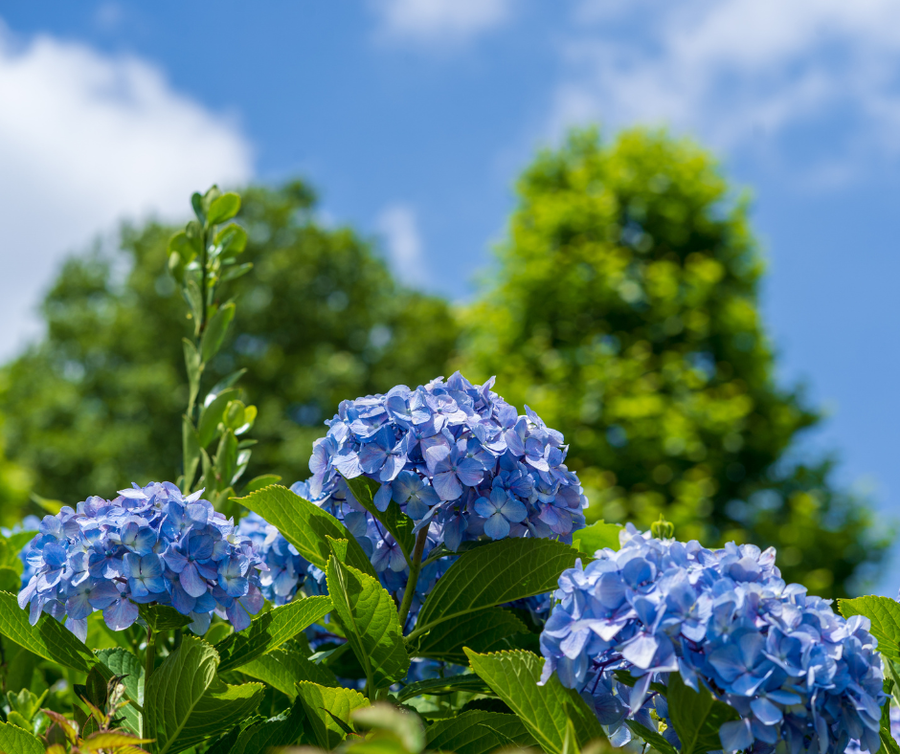
There are a few fungal leaf spot diseases that can attack hydrangea, cercospora leaf spot and anthracnose being the most common. Generally, these two diseases do not kill the plants, they are mostly aesthetic in that once the leaves are infected, they will stay that way until they drop off the plant in winter. These diseases do not usually kill the plants, but if infection occurs multiple years in a row, plant vigor can be reduced. In years where we have wet springs, the leaf spot diseases are usually more severe.
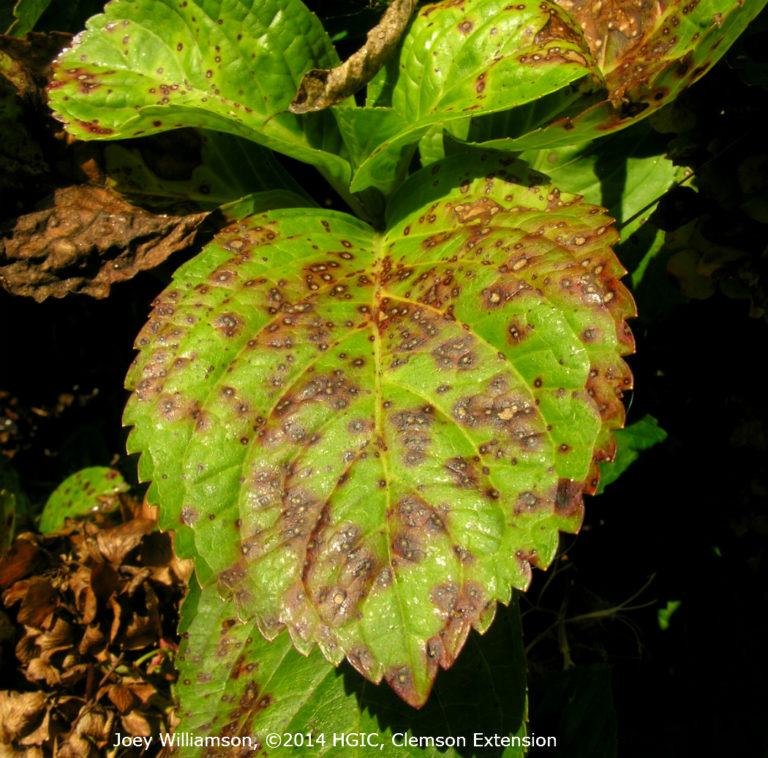
Cercospora leaf spot is the one that I seem to see most every year on my hydrangeas. The spots have a reddish to purple border with a gray/tan center. Infection usually starts on the lower leaves of the plant and moves up. Many times, by the time you notice an infection, it’s too late to spray a fungicide. In this case plan to do a good clean up of fallen leaves and have a management plan for the next growing season.
Watering techniques will help in reducing the spread of the fungal spores. Avoid getting the leaves wet by using drip irrigation instead of overhead sprinklers, and water early in the morning so drying can occur when the sun reaches the plant. Remove infected leaves to reduce the source of the inoculum so the spores can’t spread. Remove and dispose of the leaves that fall on the ground or that remain in the bush during the winter to limit the disease spores from the previous year. Never add diseased materials to your home compost pile, put them in the trash.
Fungicide protection in the spring can help the new, tender leaves resist infection, especially in young plants. Fungicides containing chlorothalonil, mancozeb, or thiophanate-methyl are most effective when applied prior to the first sign of leaf spots. Reapplying every 10 to 14 days may be needed to prevent these diseases. Remember that fungicides are preventative, not curative so once leaves are infected any fungicide applied would only protect new growth. When using any pesticide always follow the label directions for application rates and safety precautions.
If you are considering adding hydrangea to your garden make sure you have a spot that will provide prime growing conditions. Hydrangea like morning sun and afternoon shade with soil that has good organic matter and is moist but well-drained. For more information on Hydrangea's, visit this Hydrangea information page.
Join our mailing list!
Enter your email address to receive updates.
Written By

More About