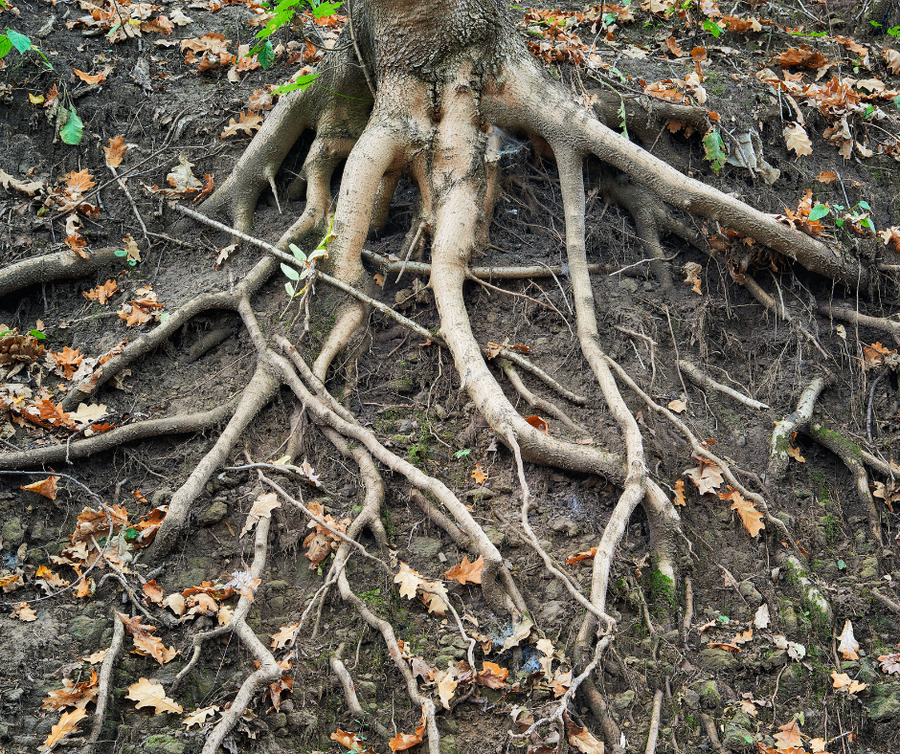
Most urban tree decline that we can see is most likely related to root problems. Indicators of tree root problems are: crown die back, epicormic shoots and suckers, stunted twig growth, leaves too small and yellowing, and a heavier than usual crop of berries, cones, or nuts. Other indicators of tree decline can be: girdling roots, dead bark on flare roots, lack of root flare, fungal growth, insect activity.
Tree root problems can be caused by the following:- People pressure – human activities can lead to compaction of the soil surrounding the roots or wounding of the roots. Foot and vehicle traffic or construction equipment cause soil compaction. Grade changes affect roots through addition or removal of soil. Planting at improper depths, excessive mulch piled over the root collar or flare, soil tilling that damages shallow roots (80% of all roots occur in the top 12” inches of the soil), excavation and trenching that severs or tears roots, and damage by equipment such as mowers and trimmers are examples of the types of human activities that cause tree root problems.
- Competing plants – grass, weeds, annuals, and ground covers compete with trees for available nutrients and moisture. In urban situations overlapping root zones of multiple plants increase this competition.
- Hardscape conflict often leads to cut roots, limited soil volume, and reduced availability of water and air.
- Limited soil volume – such as that in containers, street plantings, or parking lot islands.
- Chemicals – excess fertilizer, herbicides, and deicing materials can contribute to tree decline.
- Pathogens – such as insects, fungi, bacteria, or nematodes.
- Voles and other animals – animals might actually feed on roots and bark or can damage roots by digging or burrowing. Rodent feeding may indicate excessive mulch was piled on top of the roots.
- Others include poor quality nursery stock, soil erosion, soil hardpan, excessive surface water, shallow water table, and lack of water
You may be able to add your own bullets to this list from your own experience. Roots are the most important part of a plant and we tend to forget them because they are out of site so out of mind.