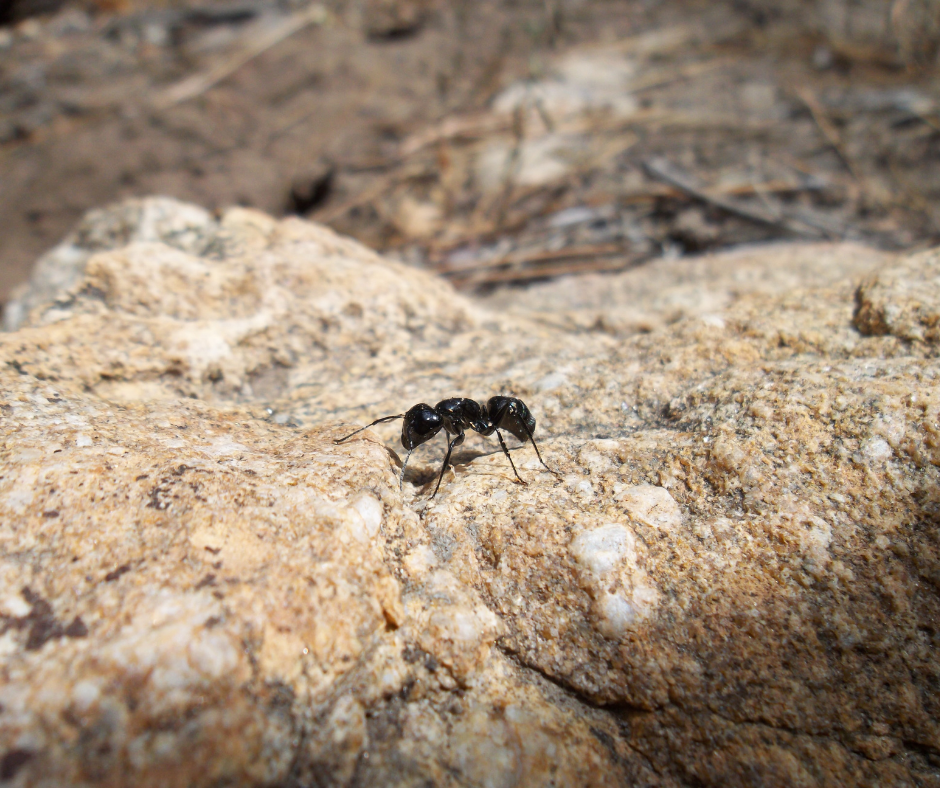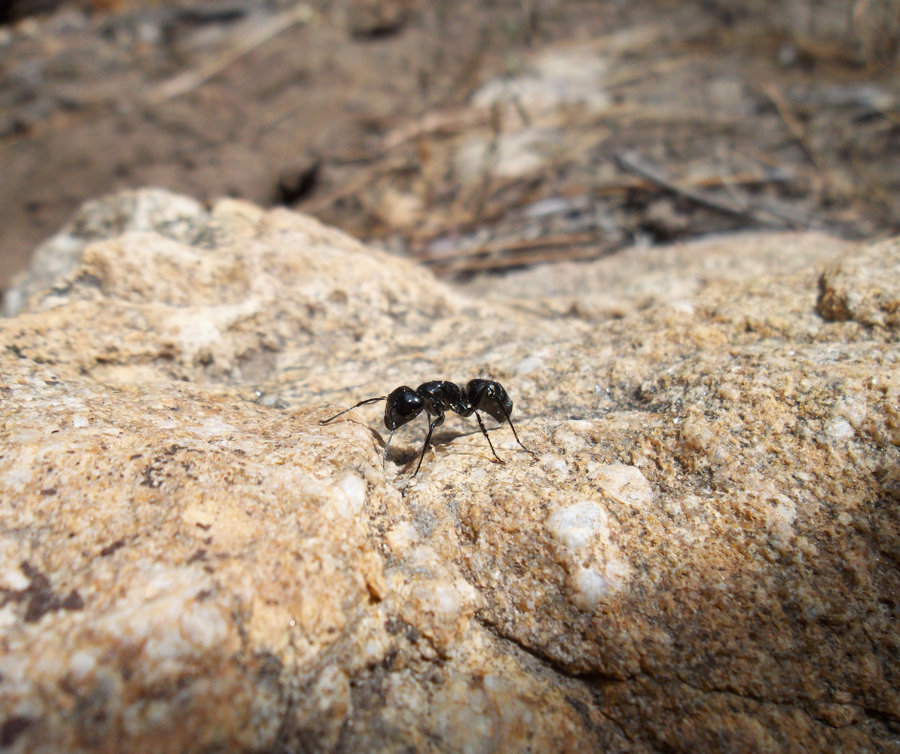
There are several species of carpenter ants in North Carolina, but the black carpenter ant is the one most commonly found in homes. Because these are social ants, there are several castes and they can range in size from ¼ to ¾ of an inch long. The pedicel (waist) is one segmented. Faint rings of golden hairs are on the abdomen. Winged females and the large workers of the colony have distinctly heart-shaped heads when viewed from above. All carpenter ants have a thorax that is convex in profile.
Carpenter ants are well-known pests of structural wood, but they also can damage turf and ornamentals. Large colonies forage through lawns and clear trails through the turf. Also, these ants contribute to damage or death of plants by keeping aphids. Honeydew is an important part of the carpenter ant diet. Workers tend aphids on the leaves or roots of plants. The ants protect the aphids from enemies and stimulate their honeydew production, which causes increased feeding by the aphids on the host plants.
Also, colonies of carpenter ants invade vulnerable sites in plants, such as wounds and scars. Some researchers believe they attack entirely sound wood. It has not been proven that carpenter ants can kill a tree simply by chewing out areas, but carpenter ant galleries in trees do leave branches and trunks more susceptible to wind damage. To prevent carpenter ant problems in trees or shrubs, guard against moisture damage, repair wounds, and treat aphid infestations.
Carpenter ants often wander indoors searching for meat, sweets, and other foods. This does not necessarily indicate a structural infestation, although it may indicate an infestation on your property. However, the presence of foraging carpenter ants indoors very early in the year (January through March) is an
indication of a structural infestation. Colonies inhabiting heated structures emerge from hibernation earlier than colonies in natural structures. If a structural infestation is suspected, contact a professional pest control service for an inspection of your house and property.
To learn more about carpenter ants visit the NC State Extension page on Biology and Control of Carpenter Ants.