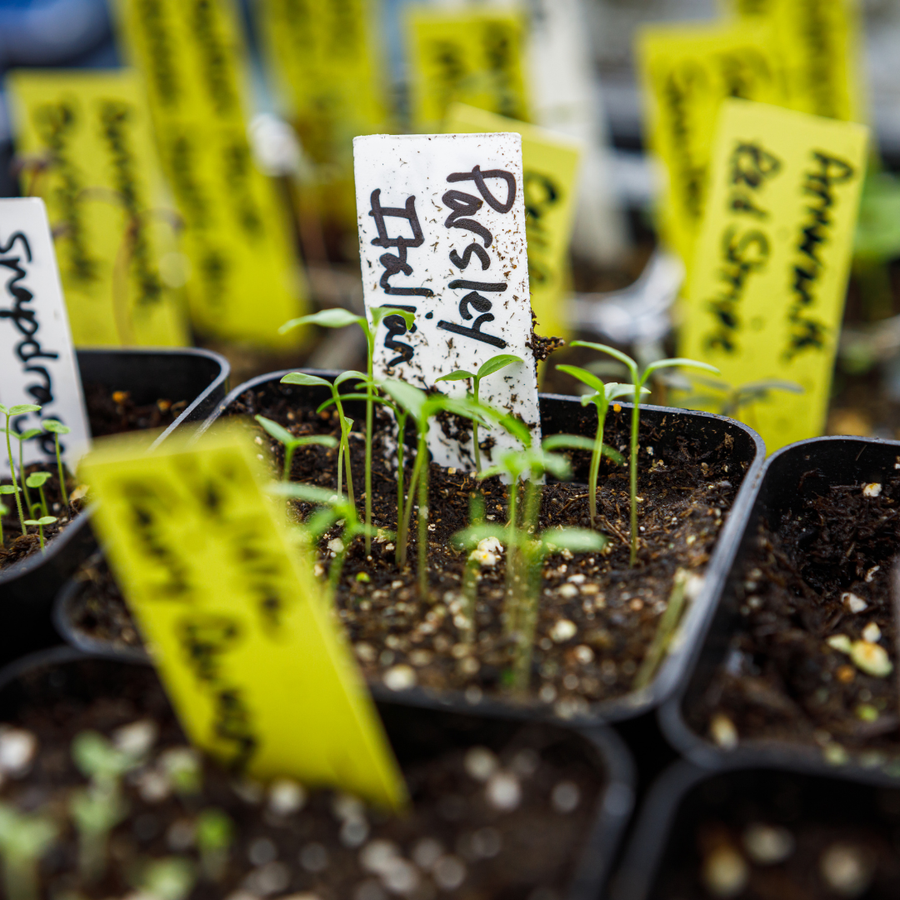
There are many herbs that can be grown successfully indoors. These plants usually won’t grow as well as they did outdoors; but with a little regular attention, you can achieve pleasing results.
Herbs need at least 5-6 hours of direct sunlight per day. You may substitute “grow lights” for some of this time, but plants will need 8-10 hours of artificial light per day if it is the only source. Daytime temperatures between 65° and 70°F with nights about 10° cooler are ideal for herbs.
Sterile potting soil is best for indoor planting. If using a potting soil with no fertilizer added, herbs should be regularly fertilized with an organic fertilizer such as liquid seaweed extract or compost tea. If using a synthetic fertilizer apply at ¼ - ½ of the rate recommended on the label. Herbs require only modest amounts of fertilizer so don’t over-apply.
Water is essential to plant life. Too much, however, is as deadly as not enough. Always check the soil before watering using your finger to make certain the soil is dry for at least an inch down before watering. Water the plant thoroughly with warm water until the water comes out of the pot’s drainage hole. Allow the pot to drain completely, discarding the run-off before returning the pot to its place.
Choose healthy plants for indoor culture -- preferably those which are low growing and compact. Parsley, mints, rosemary, sage, chives, lemon verbena, basil, oregano, and thyme are popular indoor herbs. Pineapple sage can be grown as a houseplant if it is tended carefully. Its leaves are wonderful used in tea and fruit salads.
Growing herbs indoors can be a fun family activity. Don’t be afraid to experiment, it is far simpler than it sounds and you can have fresh herbs all winter.
If you have questions about growing herbs indoors call the Extension Master Gardener℠ Volunteers of Union County Growline at 704-283-3822.